
Retire in Hungary 2026 is suddenly back in my inbox in a way it has not been for a while. I am writing this from a hotel room in Rome, here for work, and since last Sunday’s election result came through, the messages have picked up quickly. People who had quietly parked the idea are asking again. Is it possible now. Has anything actually changed.
At the same time, it has become oddly personal. My husband has just started drawing his UK pension. My brother-in-law is doing the same from Canada. Neither of them has actually stopped working, but the label is there now. Pensioner. It changes how you think about where life happens next, and suddenly these questions are not theoretical anymore.
What I am seeing is a shift in attention. Dual citizens, or those partway through the process, are looking at Hungary again with more intent. People who were hesitant a year ago are paying closer attention. There is a sense of cautious optimism, but also a lot of confusion about what the election result actually changes in practical terms.
So before this turns into another round of assumptions and half-answers, here is the current reality of retiring in Hungary in 2026.
To retire in Hungary in 2026, EU and EEA citizens can settle freely. Non-EU citizens currently need a Golden Visa investment of €250,000. No standard retiree permit exists yet. A new government has raised hopes for more flexible options, possibly by 2027. Nothing is enacted. Watch closely.
I have lived in Hungary since 2017. My husband, my brother-in-law, and my mother are all drawing international pensions here. I navigate this system daily, not theoretically. Information current as of April 2026.
Can You Retire in Hungary in 2026?
For most non-EU citizens, the answer is still no. Not on a pension alone. Hungary has no standard retirement visa. The permit that made it possible for self-sufficient retirees was removed in 2024, and nothing has replaced it yet.
What exists right now:
- EU and EEA citizens register residency under free movement rules. No investment required, no pension test.
- Non-EU citizens with Hungarian dual citizenship retire here as EU citizens once citizenship is confirmed. Simplified naturalisation through Hungarian ancestry remains in place regardless of which party governs. Both sides have reason to keep it there.
- Non-EU citizens without citizenship need the Golden Visa route or another qualifying permit. Pension income alone does not qualify.
- Covered by Brexit transitional arrangements: individuals legally resident in the EU before Brexit generally retain the same rights as EU citizens when settling in Hungary.
One note for those working toward Hungarian citizenship through ancestry: 2026 is a good moment to move on that application. Simplified naturalisation rules are unlikely to change under any government. If you have been putting it off, stop putting it off.
New Leadership, New Rules?
TISZA won. For people watching Hungary from abroad, particularly dual citizens and diaspora communities in Canada, UK and the US, the reaction has been immediate. Questions that went quiet are back.
They have pledged real investment in public services: healthcare, education, infrastructure. Hungary’s public health system has always been accessible in principle and uneven in practice. Chronically underfunded is not an unfair description. A government with a mandate to fix that is a different proposition than the one that came before.
Hungary also stays firmly in the EU. For people who spent the past few years watching from the sidelines, uncertain whether the political direction was something they wanted to build a retirement around, that uncertainty is largely gone.
What has not changed: the rules. No new permits have been issued. No legislation has passed. Budapest lawyers I chatted to before the election result were clear that even under a new government, no major legislative changes would reach the statute book before early winter 2026 at the earliest. A new government forms first. Then comes the summer recess. Then, perhaps, real movement.
The mood has changed. The rules have not caught up yet.
The Permit Everyone Wants Back
The “other purposes” residence permit was never complicated. If you could show you were financially self-sufficient, a pension, savings, or a combination of both, you could apply to live in Hungary legally. No employer, no enrolled course, no €250,000 investment fund.
It was removed in late 2023, effective 2024. Budapest law firm Wagner and Wagner, in a January 2026 analysis, put it plainly: the permit functioned as a safety valve for exactly the kind of financially independent retiree Hungary is now turning away. They argue a new version, tied to a minimum income or asset threshold, would be in Hungary’s interest.
Dr. Sánta Szabolcs Miklós LL.M., who contributes to the immigration section of my How to Hungary newsletter, does not expect anything to be enacted in 2026. His assessment, and mine: 2027 is the realistic horizon.
TISZA has not yet articulated a specific position on retiree permits or residency by investment. Analysts expect the Golden Visa programme to come under review, given the party’s pro-EU and anti-corruption commitments. Whether that review opens space for a simpler income-based retiree route or closes options further is genuinely unclear.
Do not build your retirement plans around a permit that does not exist. Note the direction. Keep watching.
The Golden Visa: One Year On
The Guest Investor Programme is still the only formal route for non-EU retirees without Hungarian citizenship. A minimum €250,000 investment in a Hungarian National Bank-approved real estate fund, held for five years, grants a 10-year renewable residence permit for you and your immediate family. To be clear: this is an investment in a regulated fund, not the purchase of a property worth €250,000.
The practical picture one year in: clearer than it was, but not frictionless. When my 2025 post went up, readers were contacting banks that could not explain the process. Some were told the programme was managed by a Chinese institution. That confusion has largely eased. Specialist legal advice remains essential. All documentation is in Hungarian.
The part worth noting that acquired rights are generally not withdrawn in Hungary even when legislation changes. If you qualify for the Golden Visa now and are seriously considering it, waiting to see what TISZA does may cost you the option entirely.
Current requirements:
- €250,000 minimum in an approved investment fund, or a €1,000,000 donation to a designated institution
- Investment held for five years
- 10-year renewable permit for applicant and immediate family
- Legal residency, not citizenship
- Permanent residency application possible after three years of lawful residence
Retirement, Hungarian Style
My husband recently started drawing his UK pension. My brother-in-law too, from Canada. Neither has actually stopped working. In our household the idea of retirement as a full stop is largely theoretical. But the cross-border paperwork between the UK and Canada has been an education. What nobody warns you about is how many phone calls you will make to offices that mostly want to keep you on hold.
Here is the detail most retirement guides miss: if Hungary is your tax residency, state pensions from any country are tax free. Many private pensions qualify too. If your pension is your only income, you do not need to file a tax return in Hungary at all. *Applies only if you are a Hungarian tax resident, meaning 183 or more days per year.
The admin varies by country. For Andrew, notifying his UK pension provider was straightforward. Canada required a few extra forms. You may need to notify your pension board that your tax residency has changed, but once that is done, it is done. Verify your specific situation with a qualified Hungarian tax adviser. My Your Money, Your Future event recap covers exactly this.
| Expense | Budapest | Outside Budapest |
|---|---|---|
| Single person (exc. rent) | €640–€860/month | from €500/month |
| Central 1-bed rental | €600+/month | €300–€500/month |
| Private health insurance | €50–€200/month | €50–€150/month |
Private clinics with English-speaking staff are the practical choice for most internationals. Faster, more comfortable, and a fraction of equivalent costs in the UK, Canada, or the US.
The language is not easy. Hungarian does not yield to good intentions. What you will not find here is the sanitised expat bubble of some retirement destinations. Hungary asks something of you. Most people who stay say that is part of why they stayed.
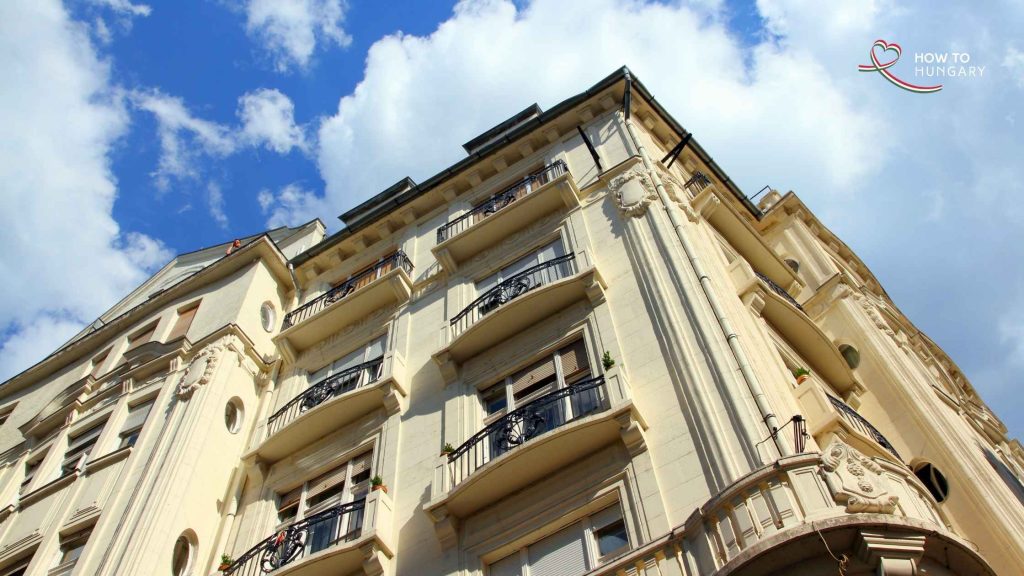
Cost of living in Hungary runs ~40% below Western Europe. For retirees on tax-free pension income, the math can work well.
Stay Informed, Not Surprised
Hungarian immigration rules have changed twice in three years. They will change again. The people who navigated those changes without crisis were paying attention before the change, not after.
If you want to stay ahead of what is coming in 2027, my How to Hungary Immigration Insider newsletter is the most practical way to do it. Once a month, end of the month.
Subscribe to the How to Hungary Immigration Insider – immigration updates once each month.
For official immigration requirements: enterhungary.gov.hu and oif.gov.hu
FAQs
Can I retire in Hungary in 2026 without a Golden Visa? EU and EEA citizens can register residency freely with no investment required. Non-EU citizens currently need the Golden Visa, a €250,000 investment in an approved fund. No standard retiree permit exists in 2026.
Did the 2026 Hungarian election change anything for retirees? Not yet in legal terms. No new permits have been issued. The new government has signalled investment in public services and there is renewed discussion about a retiree permit, but nothing is enacted before autumn 2026 at the earliest.
Are pensions taxed in Hungary? If Hungary is your tax residency, state pensions from any country are generally tax free. Many private pensions qualify too. If your pension is your only income, you do not file a tax return in Hungary.
Will the Golden Visa still exist in 2027? Uncertain. Analysts expect the programme to come under review under the new TISZA government. Immigration lawyers advise that if you qualify now, acting under current rules is safer than waiting.
What happened to the Hungary retirement visa? Hungary’s “other purposes” permit, the standard route for non-EU retirees, was abolished in late 2023 and removed in 2024. Budapest law firm Wagner and Wagner argue publicly that reintroducing it with an income threshold would be in Hungary’s interest.
A Good Life, If You Can Get There
We love our life here. That part is easy to say. The balance between Budapest and the countryside, the culture one day, the quiet on our wine hill the next, it works in a way that is hard to explain until you are living it. And yes, it is a genuinely good place to retire. The pace, the cost of living, the access to everything you need. I understand why so many of you are asking the question again. I am hopeful too. But I am also realistic about how Hungary works by now.
For now, I am closing the laptop and heading to spend the afternoon in the Roman sunshine. We will see what Hungary decides to do next.
This post is for informational purposes only. I am not a lawyer, immigration adviser, or financial planner. Always seek qualified legal and financial advice before making any decisions about residency or investment in Hungary.

Anikó Woods is a Canadian-Hungarian writer, technology specialist, and digital strategist who swapped Toronto traffic for Hungarian bureaucracy. She’s the creator of HOW TO HUNGARY: Budapest & Beyond. Since moving to Hungary in 2017, she’s been deep in the paperwork trenches – fact-checking, interviewing experts, and helping others make sense of the madness. Her writing turns chaos into clarity, with a few laughs (and wine recommendations) along the way.
A good, informative article for those pondering retirement in Hungary.
You might want to review your estimate on rental in Budapest – prices are insane.