
Classical music in Budapest is one of the great privileges of living here, and for years, it is one I did not use nearly enough. I studied opera, music theory, history and piano at the Royal Conservatory of Music in Toronto. In fact, it is one of the reasons I moved to Hungary in the first place. And yet, I still found myself going far less often than I meant to. The programmes were in Hungarian. The halls were vast. On top of that, there was always a low-grade anxiety about getting something wrong – arriving at the wrong entrance, not knowing when to clap, feeling like an outsider in a room where everyone else seemed entirely at home.
In the end, I think I just needed the right concert. Fortunately, on Saturday June 6th, my friend Jonathan Brett is conducting exactly that. I adore this repertoire. I know what Jonathan does with an orchestra. And so, for the first time in longer than I care to admit, I have not just booked a ticket -I have booked tickets for my whole family.
Classical music Budapest – Mendelssohn Reimagined is a full all-Mendelssohn evening at the Budapest-Fasori Evangélikus Gimnázium on Saturday, 6 June 2026 at 6:30pm. Fewer than 100 seats, bilingual English and Hungarian, tickets 7,500 HUF. How to Hungary readers get 50% off with code HOWTOHUNGARY50 – that’s 3,750 HUF.
I have lived in Budapest since 2017 and have attended classical concerts across the city’s major and minor venues; everything in this post is based on firsthand experience.
Why Budapest Concerts Feel Out of Reach
Budapest has one of the richest classical music cultures in Europe. The Budapest Music Center documents and archives Hungarian music heritage. The Liszt Academy and Müpa programme world-class performances year-round. On paper, it is a paradise.
In reality, if you are an international here, there are three walls between you and an evening you will actually enjoy. Programmes and announcements are almost always in Hungarian only. The main venues seat hundreds, which creates a formality that feels unwelcoming if you have never been. And buying tickets, if you do not read Hungarian, can feel like a puzzle you were not given the solution to.
This concert solves all three at once.
Classical Music Budapest: This Concert
The Solti Chamber Orchestra performs a full evening of Mendelssohn at the Budapest-Fasori Evangélikus Gimnázium, one of the most beautiful historic buildings in Pest. Jonathan Brett conducts. Karolina Csáthy plays the violin. Everything is announced in English and Hungarian. The venue holds fewer than 100 people. Tickets are on sale now in English via Cooltix.
Programme:
- Mendelssohn – Die Hebriden (The Hebrides Overture)
- Mendelssohn – Violin Concerto in E minor — Karolina Csáthy, violin
- Mendelssohn – Symphony No. 4, “Italian”
I am bringing Andrew, my mother, my sister and my best friends. Not all of them go to classical concerts regularly. That is precisely the point. This is the kind of evening that works for a first-timer and a conservatory graduate in equal measure, and it is rare to find both in the same room.
👉 Book tickets – Mendelssohn Reimagined | Code HOWTOHUNGARY50 for 50% off
There is something else worth knowing. This concert is part of the 2026 Audite International Masterclass for Conductors, which Jonathan directs. The 6 June performance is the professional benchmark recording session: musicians play these three works at full professional standard so that masterclass participants, conductors from across Europe, can study and then rehearse the same repertoire with the same orchestra in July.
That means nobody in the room is on autopilot. These are works so familiar that professional orchestras can sleepwalk through them. Jonathan has spent his career making the case that real depth in this music only becomes audible when a conductor actively prevents that from happening. In a room of fewer than 100 people, you will hear the difference.
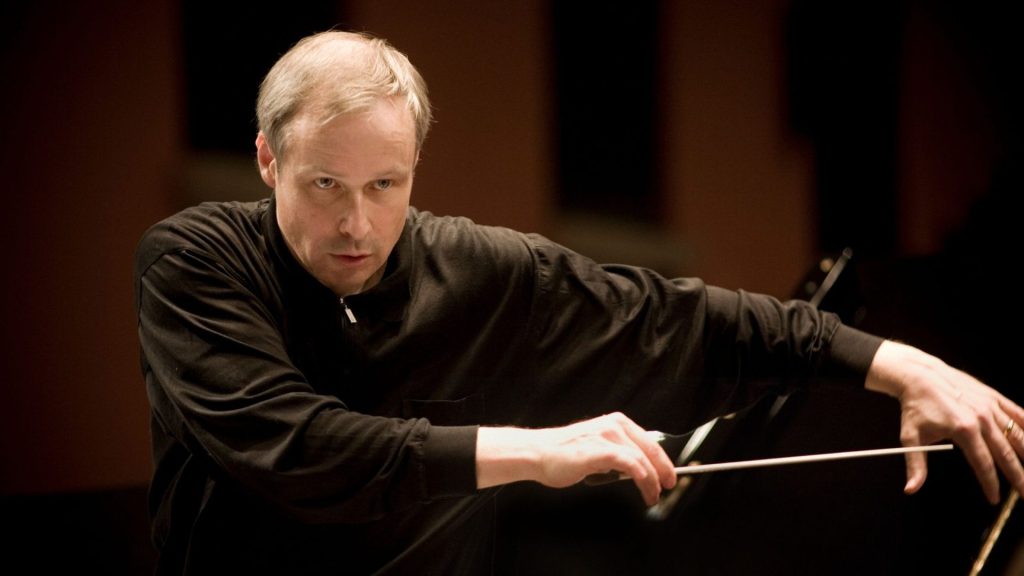
Some conductors keep the music at arm’s length. Jonathan Brett pulls you inside it.
Three Works Worth Knowing
You do not need to prepare. But if you want context, here it is.
Die Hebriden. Mendelssohn was twenty and on a boat to Fingal’s Cave in the Scottish islands when he wrote the opening theme in a letter home. It became one of the most vividly descriptive pieces in the orchestral canon. Ten minutes of sea and basalt and Atlantic light. If you have never heard it, you will wonder why nobody told you sooner.
Violin Concerto in E minor. One of the most performed violin concertos ever written, and the one I would recommend to anyone who has never been to a concerto before. It begins immediately. No long orchestral preamble. The violin enters in the second bar, playing the opening theme before you have settled into your seat. Karolina Csáthy studied under Maxim Vengerov and is one of the most exciting soloists playing in Budapest right now. In a room of fewer than 100 people, this will be a completely different experience from any recording.
Symphony No. 4, “Italian.” Mendelssohn started sketching it at twenty-one, in Italy, and it is the most exuberant thing he ever wrote. The final movement borrows from Neapolitan folk tradition. It closes the evening. You will not want the room to go quiet.

Some musicians play the notes. Karolina Csáthy plays the room. We are lucky she is playing ours.
The People on Stage
Jonathan Brett was the founding Artistic Director of the English Classical Players for over twenty years, building it from a classical chamber ensemble into one of the UK’s finest orchestras. He was the first British conductor ever invited to work with the Moscow Philharmonic, making his debut in 2002 with Beethoven’s Ninth Symphony. He co-founded the Conductors’ Academy in 2009, which has run programmes across the UK, Brazil, Estonia, Hungary, Poland and Russia. Maxim Vengerov has described him as demonstrating the highest level of musicianship with a rare gift for making conducting comprehensible.
Jonathan is based in Budapest. He is a friend. I am not writing a neutral preview. I am telling you to go.
Karolina Csáthy was born in Budapest, grew up in Surrey, and read Music at Trinity College, Cambridge. She has performed at Cadogan Hall, St Martin-in-the-Fields and the Budapest Music Center. She has been studying at the Royal College of Music since 2022. She is a founding member of Chapel Perilous, an ensemble directed by a member of the Gesualdo Six.
Book Your Tickets
Event: Mendelssohn Reimagined Date: Saturday, 6 June 2026 Time: 6:30pm to 8:30pm Venue: Budapest-Fasori Evangélikus Gimnázium, Városligeti fasor 17-21, 1071 Budapest Seats: Fewer than 100, unreserved Language: English and Hungarian Price: 7,500 HUF standard | 3,750 HUF with code HOWTOHUNGARY50
Arrive by 6:00pm. Unreserved seating fills from the front. With fewer than 100 places, do not leave it to the day.
FAQ: Classical Music in Budapest
Is classical music in Budapest accessible if I don’t speak Hungarian? Most Budapest concerts are in Hungarian only, which puts many internationals off. Mendelssohn Reimagined on 6 June 2026 is presented in both English and Hungarian. It is one of the best entry points to classical music in Budapest if you have been meaning to go but never quite made it.
How much do classical music tickets cost in Budapest? Far less than London, Vienna or Berlin. Major venue tickets range from roughly 3,000 to 15,000 HUF. Mendelssohn Reimagined on 6 June is 7,500 HUF standard. How to Hungary readers get 50% off with code HOWTOHUNGARY50 at checkout on Cooltix – that is 3,750 HUF for a world-class evening.
What is the Mendelssohn Reimagined concert? An all-Mendelssohn programme by the Solti Chamber Orchestra at the Budapest-Fasori Evangélikus Gimnázium, Saturday 6 June 2026 at 6:30pm. Programme: Die Hebriden, Violin Concerto in E minor with soloist Karolina Csáthy, and Symphony No. 4 “Italian.” Conductor Jonathan Brett. Fewer than 100 seats, unreserved. Bilingual English and Hungarian.
What is the Audite International Masterclass for Conductors? An intensive conducting programme directed by Jonathan Brett, co-founder of the Conductors’ Academy. The 6 June concert is the professional benchmark recording session for the 2026 masterclass – musicians perform at full standard so participants can study and then conduct the same works with the Solti Chamber Orchestra in July.
Where is the Budapest-Fasori Evangélikus Gimnázium? Városligeti fasor 17-21, 1071 Budapest, XIV district. A short walk from Bajza utca station on the M1 yellow line. One of Budapest’s most beautiful historic buildings and an intimate, acoustically excellent venue – very different in feel from the city’s large concert halls.
Come and Join Us
June, to me, is the official start of summer in Budapest. The evenings are long, the city is at its best, and there is no better way to open the season than an evening like this. One of the things I love most about living here – genuinely, after nearly a decade – is that world-class music, theatre and culture are affordable and accessible in a way that simply does not exist in most western European cities. A concert like this, in a room this intimate, with musicians of this calibre, would cost three times the price in London.
And if you are still finding your feet in Budapest and Hungary, my HOW TO HUNGARY ebook covers everything I wish I had known when I moved here. Because the best thing about living in Hungary is knowing where to look.
Karolina Csáthy: karolinamusic.org Jonathan Brett: jonathanbrett.com Conductors’ Academy: conductorsacademy.org

Anikó Woods is a Canadian-Hungarian writer, technology specialist, and digital strategist who swapped Toronto traffic for Hungarian bureaucracy. She’s the creator of HOW TO HUNGARY: Budapest & Beyond. Since moving to Hungary in 2017, she’s been deep in the paperwork trenches – fact-checking, interviewing experts, and helping others make sense of the madness. Her writing turns chaos into clarity, with a few laughs (and wine recommendations) along the way.
0 Comments