
Masks, Doughnuts, and Making Noise
Farsang is one of those seasons Andrew and I have slipped into over time rather than consciously adopted. Over the years, we’ve attended everything from elaborate masked balls to much simpler gatherings where the only real rule was that you wore a mask and leaned into it. We always do. Dressing up matters. Hiding your face is part of the point.
We are also entirely unapologetic about the food. Farsang is when we eat fánk (doughnuts) with enthusiasm and intent, operating on the shared understanding that this is not the moment for restraint.
That sense of collective permission felt especially vivid this morning at Ferenc tér market. I was there with my sister when a group of busós arrived without warning. Bells, shouting, movement, masks that were thrilling for children and genuinely unsettling for my tiny dog. Winter, if it had any sense, would have taken the hint.
A season, not a single day
Farsang in Hungary is not a one-off carnival weekend. It’s a long stretch of time that runs from Epiphany in early January until Shrove Tuesday, just before Lent begins.
In 2026, that means from 6 January to 17 February, with Ash Wednesday falling on 18 February. Because Easter comes early in April, Farsang is slightly shorter than usual this year, which only seems to sharpen its intensity toward the end.
What matters culturally is not just when it happens, but how it unfolds. January is tentative. February grows louder. The final days feel deliberately excessive, as though everyone understands that the switch to restraint is imminent.
Masks matter here
Masks during Farsang are not decorative. They’re functional.
Historically, they allowed people to step outside their usual roles. Authority could be mocked. Social hierarchies blurred. Excess was permitted, even encouraged. That tradition still hums beneath modern celebrations, even when it shows up in subtler ways.
There’s a reason masks remain central. They create distance from the everyday self, and with that distance comes freedom. You don’t need to speak perfect Hungarian to participate. You don’t need to explain yourself. You just need to join in.
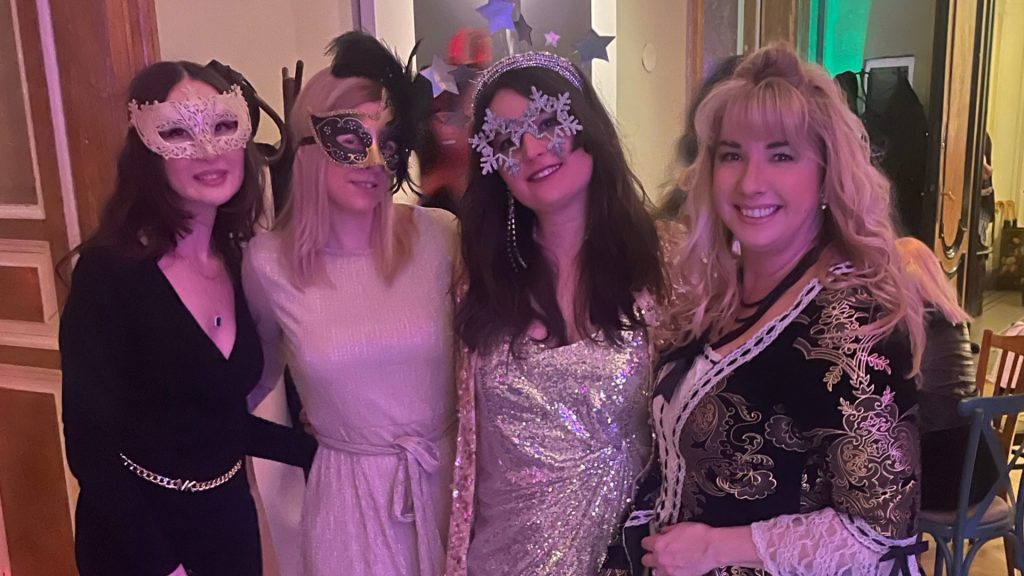
Farsang at Brody House. Everyone masked except me. I did have one. I have no idea where it went.
Food with a deadline
Farsang food is rich because it is meant to be. Lent is coming, and this is the final stretch before fasting and restraint.
Fánk (doughnuts) appear everywhere during this season, in bakeries, homes, offices, and markets. Everyone has an opinion on which version is best, and everyone will insist you try theirs. Meat-heavy dishes and indulgent baking are part of the rhythm, not an indulgence to apologise for.
The food is not just about eating well. It’s about marking time.
Noise as a ritual
If Budapest introduces Farsang gently, Busójárás announces it with force.
In Mohács, the ritual takes on its most physical form. Men in carved wooden masks and sheepskins flood the streets, ringing bells, lighting fires, and making as much noise as possible. The goal is not subtle symbolism. It is to frighten winter into leaving.
Busójárás is recognised by UNESCO as intangible cultural heritage, and in 2026 it reaches its peak between 14 and 17 February, during the final days of Farsang. It is loud, chaotic, deeply rooted, and impossible to misunderstand once you’ve experienced it.
Budapest, slightly restrained
In Budapest, Farsang is present but less overwhelming. Masked balls, community events, and family-friendly programmes appear across the city, often hosted by cultural centres and schools.
It’s a version of Farsang that suits urban life. Easier to dip into. Easier to leave. Still recognisably part of the same tradition, but softened at the edges.
For newcomers, this can be the ideal entry point. Participation without pressure. Enough context to understand what’s happening, without being thrown straight into the deep end.
This season lands differently
Farsang works because it is communal. You don’t need an invitation to understand its tone. You feel it in the markets, the bakeries, the schools, and the streets.
For people new to Hungary, it offers something rare. A cultural moment where explanation matters less than presence. Where noise replaces fluency. Where winter is confronted rather than endured.
When winter finally gets the message
Growing up in Canada, the closest thing we had to this was Pancake Tuesday. One day. One meal. Here, Andrew will still make his famous lemon pancakes, because some traditions deserve to travel with you, but what I love about Farsang is how long it lasts. Weeks of noise, masks, indulgence, and collective agreement that winter has overstayed its welcome. I never experienced anything like this growing up. Hungary doesn’t quietly endure the season. It pushes back. Walking through Budapest today in proper sunshine, it felt like proof that it works. Winter heard us. It’s moving on.
If this season leaves you slightly unsure of yourself, not just about Farsang but about what’s expected of you more generally, you’re not alone. Cultural celebrations are only one part of daily life here. They sit alongside unspoken social rules, gendered expectations, and everyday behaviours that can be confusing whether you’re new, long settled, male, or female. That’s exactly why I wrote the 2026 edition of HOW TO HUNGARY: Budapest & Beyond. It’s designed to help you make sense of life here when things aren’t explained, from traditions and etiquette to healthcare, housing, and bureaucracy. Not so you memorise Hungary, but so you stop second-guessing yourself while living in it.

Anikó Woods is a Canadian-Hungarian writer, technology specialist, and digital strategist who swapped Toronto traffic for Hungarian bureaucracy. She’s the creator of HOW TO HUNGARY: Budapest & Beyond. Since moving to Hungary in 2017, she’s been deep in the paperwork trenches – fact-checking, interviewing experts, and helping others make sense of the madness. Her writing turns chaos into clarity, with a few laughs (and wine recommendations) along the way.
0 Comments