
If you’ve ever looked at a property listing in Hungary, you’ve probably come across közös költség, or common costs. It’s a monthly fee paid towards the running of an apartment building, but what it actually includes depends entirely on the building. That’s where much of the confusion begins. Two properties can have almost identical rents or purchase prices, yet very different monthly costs because their közös költség covers completely different things.
Andrew and I have lived in two apartments since moving to Hungary, and the difference was obvious. In our first building, water was included in the common costs. In the apartment we live in now, it isn’t. Neither approach is unusual. The important thing is understanding exactly what your közös költség covers before you compare properties, set your budget or sign a lease.
What Is Közös Költség?
Közös költség is the Hungarian term for common costs. It’s a monthly fee that covers the shared costs of running and maintaining an apartment building. Apartment owners pay it to the condominium, and many landlords pass it on to tenants as part of their monthly housing costs. Exactly who pays which elements should always be set out in the tenancy agreement.
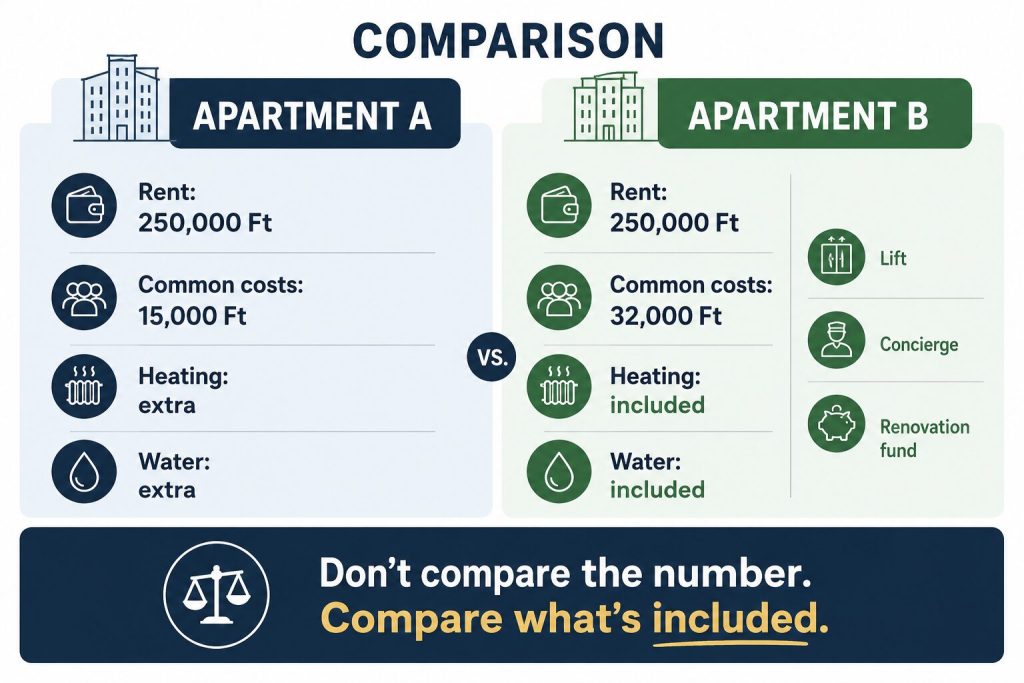
Unlike electricity or gas, közös költség isn’t based on your personal usage. Instead, it pays for the building’s shared expenses. One building may charge only for cleaning and lighting the communal areas. Another may also include heating, water, lift maintenance, building insurance, a caretaker and a renovation fund.
Most buildings calculate közös költség using each apartment’s ownership share (tulajdoni hányad). Some costs, however, may be divided equally or based on individual meters. That’s why you should always ask what’s included instead of comparing the monthly figure alone.
What’s Included?
There isn’t a standard list of what’s included in közös költség. Every condominium (társasház) decides which shared expenses are covered, so two neighbouring buildings can have very different common costs. Always ask for a breakdown rather than assuming the monthly fee covers the same services.
| Often Included | Sometimes Included | Usually Not Included |
|---|---|---|
| Cleaning of communal areas | Cold water | Electricity |
| Stairwell lighting | Hot water | Gas |
| Building insurance | Central heating | Internet |
| Building management | District heating | TV |
| Lift maintenance | Underground garage maintenance | Mobile phone |
| Garden maintenance | Concierge or caretaker | Contents insurance |
| Pest control | CCTV and security | Individual repairs inside your apartment |
| Waste management | Gym or wellness facilities | |
| Renovation fund | Swimming pool |
Don’t be surprised if the list looks completely different from one property to the next. Older buildings often have fewer shared facilities, while newer developments may include services that significantly increase the monthly közös költség. That’s why the cheapest common costs aren’t always the best value.
Why Costs Differ
Don’t compare közös költség by price alone. Compare what it pays for. Two apartments with similar rents or purchase prices can have very different common costs because each condominium decides how it runs and maintains the building.
For example, a small apartment block with no lift, no shared garden and few communal areas usually keeps costs low. By contrast, a modern development has to maintain lifts, underground parking, CCTV, landscaped gardens and other shared facilities. Historic buildings often spend more on repairs and set aside larger renovation funds to protect the building for the future.
As a result, a higher közös költség doesn’t automatically mean poor value. Instead, it may show that the owners actively maintain the building and plan for future repairs. On the other hand, unusually low common costs can sometimes point to postponed maintenance or a lack of money in the renovation fund.
| Building Type | Common Costs May Reflect |
|---|---|
| Older walk-up apartment | Basic cleaning, lighting, insurance and maintenance |
| Historic building | Façade repairs, lift maintenance, larger renovation fund |
| Modern apartment building | Lift, garage, CCTV, gardens, caretaker, shared facilities |
| Luxury development | Concierge, gym, pool, security and premium maintenance |
Renting? Read the Lease
If you’re renting in Hungary, don’t assume every part of the közös költség automatically belongs to the tenant. Although many landlords ask tenants to pay the full amount, the lease should clearly state who pays which costs. Read those clauses carefully before you sign. In practice, many rental agreements pass the full közös költség on to the tenant. However, some parts of that monthly fee may cover long-term building improvements or contributions to a renovation fund. Those costs mainly benefit the property owner, so it’s worth understanding exactly what you’re paying for before you agree to the terms.
That’s why I always recommend reading the lease carefully and asking questions if anything seems unclear. Better still, ask for a breakdown of the közös költség and check which services or contributions it includes. A five-minute conversation before you sign can prevent months of confusion later.
When Andrew and I rented in Hungary, we asked Dr Tünde Harron to review our lease before we signed it. She later helped us buy our home and has also advised other members of my family on property and business matters. That’s why I continue to recommend her to anyone buying or renting property in Hungary. Having an experienced Hungarian property lawyer explain your rights and obligations can give you confidence before you commit.
If you decide to contact Tünde, feel free to mention that you found her through HOW TO HUNGARY. It helps her understand where you heard about her, and she’ll already know the context of why you’re getting in touch.
Buying? Look Beyond the Price
When you buy a property in Hungary, közös költség becomes one of your ongoing ownership costs. Don’t judge it by the monthly amount alone. Instead, find out exactly what it covers and how the building manages its finances. Start by asking whether the building has a healthy renovation fund and whether the owners have approved any major repairs. A building that plans ahead often collects a little more each month and avoids unexpected one-off payments later. By contrast, unusually low common costs can sometimes mean the building has delayed essential maintenance.
Finally, ask whether the közös költség includes services such as heating, water or garage maintenance. Those items can make a significant difference to your monthly budget and help explain why two similar apartments have very different common costs.
Red Flags to Watch For
A high közös költség doesn’t automatically signal a problem, but a few warning signs deserve a closer look. Before you rent or buy, ask enough questions to understand where your money goes each month. For example, be cautious if someone can’t explain what’s included or refuses to provide a breakdown. Likewise, ask questions if the building has no renovation fund, has postponed major repairs for years or regularly asks owners for unexpected one-off payments. Those situations don’t always mean you should walk away, but they do deserve a closer look.
Finally, trust your instincts. A well-managed building should have clear records, transparent finances and someone who can explain how the közös költség works. If nobody seems to know the answers, you may face bigger issues than the monthly fee itself.
What to Remember
When I first moved to Hungary, I assumed közös költség worked much the same way as condo fees back in Canada. After living in different buildings, I quickly realized there isn’t a standard formula. Every condominium sets its own rules, which means the monthly figure only tells part of the story. Whether you’re renting your first apartment or buying your forever home, don’t stop at asking, “How much is the közös költség?” Instead, ask what it covers, how the building manages its finances and whether there are any costs on the horizon. A few extra questions today can help you avoid expensive surprises tomorrow.
Over the past nine years, I’ve learned that asking a few extra questions at the start can save a lot of confusion later. That’s exactly why I created HOW TO HUNGARY. If you’d like practical advice like this delivered straight to your inbox, you can join my free monthly newsletter. I round up the most important blog posts, explain any major changes and share the updates I think internationals should know about, without filling your inbox every week.
And if you’re looking for a more complete guide, my How to Hungary ebook. It brings together the lessons I’ve learned over the past nine years, along with trusted resources and expert guidance, to help you navigate life here with confidence.
Frequently Asked Questions
Who pays közös költség in Hungary: the landlord or the tenant?
In practice, many landlords ask tenants to pay the full közös költség as part of their monthly housing costs. However, the lease should clearly state who pays which costs, and not every element necessarily benefits the tenant. Before signing, ask for a breakdown of the common costs and make sure you understand exactly what you’re agreeing to pay.
Why does közös költség vary so much between buildings?
Every condominium sets its own budget and decides which shared expenses the közös költség will cover. For example, one building may pay only for cleaning and lighting, while another also covers heating, water, lift maintenance, CCTV, a caretaker and contributions to a renovation fund. That’s why comparing the monthly amount alone rarely tells the full story.
What does közös költség usually include?
Közös költség usually covers the shared costs of running an apartment building. Depending on the property, it may include cleaning and lighting of communal areas, building insurance, lift maintenance, waste collection, garden care, pest control and a renovation fund. Some buildings also include heating or water, while others charge those separately.
Is a higher közös költség always a bad sign?
No. A higher közös költség often reflects the services a building provides and how well the owners maintain it. Buildings with lifts, underground parking, security systems or larger renovation funds naturally cost more to operate. Instead of focusing only on the monthly amount, compare what’s included and whether the building appears financially healthy.
Should I ask for a breakdown of the common costs before signing a contract?
Yes. Always ask for a breakdown of the közös költség before renting or buying a property in Hungary. The monthly figure doesn’t tell you which services or contributions it covers, and those can vary significantly from one building to another. Understanding the breakdown will help you compare properties more accurately and avoid unexpected costs later.

Anikó Woods is a Canadian-Hungarian writer, technology specialist, and digital strategist who swapped Toronto traffic for Hungarian bureaucracy. She’s the creator of HOW TO HUNGARY: Budapest & Beyond. Since moving to Hungary in 2017, she’s been deep in the paperwork trenches – fact-checking, interviewing experts, and helping others make sense of the madness. Her writing turns chaos into clarity, with a few laughs (and wine recommendations) along the way.
0 Comments