
Renting in Budapest now runs about 260,000 HUF a month for the average flat, and the July 2026 figures (published 13 August) show prices still edging up rather than settling. The market cooled from last year’s scramble, but landlords have not blinked. If you are pricing a move or bracing for a lease renewal, this is where the numbers actually sit today, district by district, with the deposit and agent maths nobody quotes in the ad.
I moved to Hungary in 2017 and have rented, renewed and helped friends flat-hunt across Pest ever since. I run HOW TO HUNGARY and split my time between a Budapest flat and our place in the Balaton Highlands, so I watch this market the way you watch a kettle. Here is what changed this summer, and what it means for your budget.
What renting in Budapest costs right now
The KSH–ingatlan.com rent index for July 2026 puts the average Budapest asking rent at roughly 260,000 HUF a month. Rents rose 1.7% in Budapest from June to July, and they sit about 5.0% higher than a year ago. Nationally the picture is similar: a 1.6% monthly rise and 5.5% over twelve months.
The headline everyone repeated was that the drought in supply finally eased and the frantic bidding of 2025 calmed down. True enough. But “calmer” is not “cheaper.” The pace slowed; the direction did not change. For anyone arriving this autumn, that means you are still negotiating against a market where good flats move fast and landlords hold the cards.
The July numbers, district by district
Averages hide a lot, so here are the July 2026 median asking rents for the districts people ask me about most. Treat these as the middle of the range, not the floor.
| District | Median monthly asking rent (July 2026) |
|---|---|
| Budapest average | 260,000 HUF |
| XI, Ujbuda | 280,000 HUF |
| XIII, Ujlipotvaros and Angyalfold | 270,000 HUF |
| IX, Ferencvaros | 250,000 HUF |
| VIII, Jozsefvaros | 240,000 HUF |
| XVIII, Pestszentlorinc | 200,000 HUF |
A pattern shows up quickly. The riverside and university-heavy districts, XI and XIII, top the list because students, professionals and remote workers all want them. Districts VIII and IX still read as “cheaper central,” though both have gentrified hard and the old bargains are mostly gone. Head out to XVIII and the median drops to 200,000 HUF, which is the trade you make for a longer commute.
Why rents keep climbing, and where they cool
Three forces keep pushing prices up. Demand from international arrivals and students stays strong, especially near the universities and the two ring roads. Owners who might have sold have parked money in rentals instead, but not at a discount. And the summer high season always tightens supply as short-term lets soak up the best flats.
The cooling is real but modest. Monthly growth in Budapest slowed to 1.7%, well below the jumps of 2025, and the annual rate has come off its peak. If you are hoping for a drop, the data does not support it yet. What you can reasonably expect is a market that rises slowly rather than sprints, which at least makes budgeting less of a guessing game.
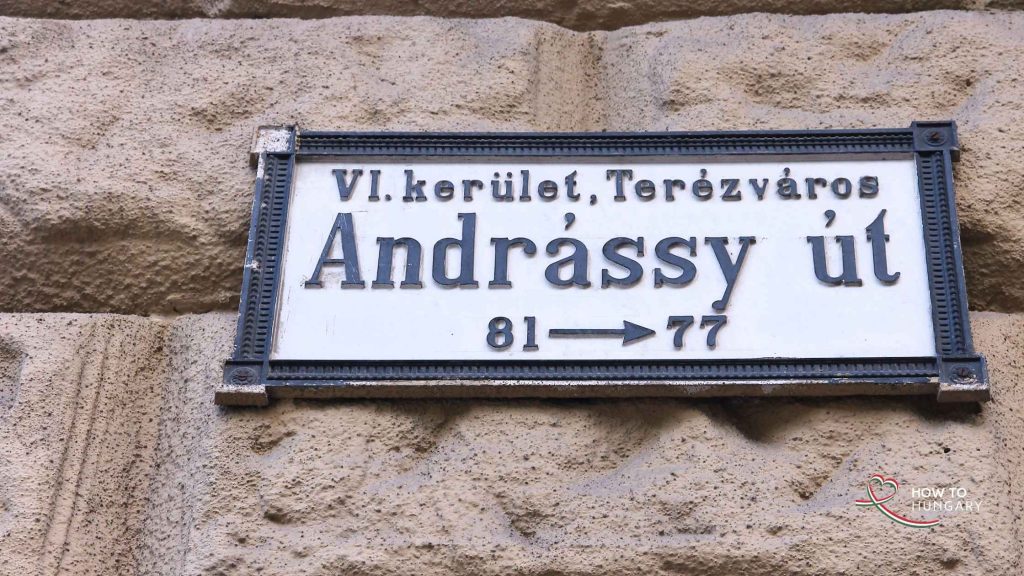
District VI, Terézváros, runs along Andrássy út and stays one of the most sought-after addresses for internationals in Budapest, which keeps rents here well above the city average.
How to budget before you sign
When Andrew and I first rented in Pest, we budgeted for the monthly rent and then watched the real number balloon at signing. Landlords here typically ask for two months’ rent as a deposit, the “kaucio,” on top of the first month up front. If an agent brokered the flat, the agent’s fee often lands at half a month to a full month’s rent. On a 260,000 HUF flat, that is easily 700,000 to 900,000 HUF you need ready on day one.
Two more line items catch newcomers. First, the közös költség, the building’s common-cost charge, sometimes sits outside the quoted rent, so ask whether it is included before you fall in love with a place. Second, utilities in a Budapest winter are not trivial, so a summer viewing can flatter the running cost. I advise to ask for a recent utility bill before signing, and the good landlords hand it over without fuss.
Move fast, but not blind. A well-priced flat in XI or XIII can be listed in the morning and gone by evening, so line up your documents and deposit before you start viewing. Then read the contract properly, because speed is the landlord’s friend, not yours.
Common questions from new renters
How much is rent in Budapest?
As of July 2026, the average asking rent for a Budapest flat is around 260,000 HUF a month, per the KSH–ingatlan.com index. Central and riverside districts such as XI and XIII run higher, near 270,000 to 280,000 HUF, while outer districts like XVIII sit closer to 200,000 HUF. Your final figure depends on size, condition and whether common costs are included.
Which districts are the cheapest?
Outer districts give you the most space for the money. In July 2026, XVIII posted a median around 200,000 HUF, well below the central figures. Districts VIII and IX read as cheaper central options at 240,000 and 250,000 HUF, but both have gentrified, so genuine bargains are rare. Weigh the lower rent against a longer commute before you commit.
Are rents still rising in 2026?
Yes, though more slowly than in 2025. July 2026 rents rose 1.7% month on month in Budapest and about 5.0% over the year. The market cooled from last year’s frenzy, but prices have not fallen. Plan for gentle increases rather than a drop when you budget a move or a renewal.
Do I need a deposit and an agent fee?
Usually both. Landlords commonly ask for two months’ rent as a deposit plus the first month up front, and agents often charge half to a full month’s rent. On a 260,000 HUF flat, expect 700,000 to 900,000 HUF ready at signing. Always confirm whether the közös költség and utilities sit inside or outside the quoted rent.
Can foreigners rent easily in Budapest?
Yes. Foreign nationals rent freely in Hungary, and no special permit applies to renting a home. You will need identification, proof you can pay, and often a Hungarian tax number for the contract. A local agent or a bilingual friend helps with the paperwork and spares you surprises in the fine print.
Related reads
- Közös Költség: Common Costs in Hungary, Explained
- What the 2025 Property Market Really Told Us
- Official data: KSH–ingatlan.com rent index, July 2026
Common questions from new renters
How much is rent in Budapest? As of July 2026, the average asking rent for a Budapest flat is around 260,000 HUF a month, per the KSH–ingatlan.com index. Central and riverside districts such as XI and XIII run higher, near 270,000 to 280,000 HUF, while outer districts like XVIII sit closer to 200,000 HUF. Your final figure depends on size, condition and whether common costs are included.
Which districts are the cheapest? Outer districts give you the most space for the money. In July 2026, XVIII posted a median around 200,000 HUF, well below the central figures. Districts VIII and IX read as cheaper central options at 240,000 and 250,000 HUF, but both have gentrified, so genuine bargains are rare. Weigh the lower rent against a longer commute before you commit.
Are rents still rising in 2026? Yes, though more slowly than in 2025. July 2026 rents rose 1.7% month on month in Budapest and about 5.0% over the year. The market cooled from last year’s frenzy, but prices have not fallen. Plan for gentle increases rather than a drop when you budget a move or a renewal.
Do I need a deposit and an agent fee? Usually both. Landlords commonly ask for two months’ rent as a deposit plus the first month up front, and agents often charge half to a full month’s rent. On a 260,000 HUF flat, expect 700,000 to 900,000 HUF ready at signing. Always confirm whether the közös költség and utilities sit inside or outside the quoted rent.
Can foreigners rent easily in Budapest? Yes. Foreign nationals rent freely in Hungary, and no special permit applies to renting a home. You will need identification, proof you can pay, and often a Hungarian tax number for the contract. A local agent or a bilingual friend helps with the paperwork and spares you surprises in the fine print.
Before you sign the lease
August is the worst month to flat-hunt and the most common one, because leases and school years reset together. If you can, view in the shoulder weeks of September when the short-term crowd thins and landlords grow a little more flexible. Bring your deposit, ask for a utility bill, and check the közös költség line twice. And plan for the notary.
When Andrew and I rented our first flat after we arrived, the landlord asked us both to sign a kiköltözési nyilatkozat, a notarized move-out declaration that lets a landlord enforce an eviction without going to court if a tenant overstays. I read it twice and signed it. Most landlords ask for one now, so it is standard rather than a warning sign. It is legal, the cost usually splits 50/50, and it means one more appointment in front of a notary, so build the time and the fee into your plan. Do that and Budapest is a fair market to rent in, expensive by Hungarian standards but honest once you know the maths.
If you want the full moving-in playbook, the deposits, the contracts, the district trade-offs, it is all in my HOW TO HUNGARY ebook. I had every process reviewed by property lawyers so the guidance holds up, then wrapped it in the real stories from my own years here, the useful ones and the funny ones.

Anikó Woods is a Canadian-Hungarian writer, technology specialist, and digital strategist who swapped Toronto traffic for Hungarian bureaucracy. She’s the creator of HOW TO HUNGARY: Budapest & Beyond. Since moving to Hungary in 2017, she’s been deep in the paperwork trenches – fact-checking, interviewing experts, and helping others make sense of the madness. Her writing turns chaos into clarity, with a few laughs (and wine recommendations) along the way.
0 Comments